
FRA – System for Autonomous Fault Record Analysis in Distribution Networks
PRODUCTS AND SOLUTIONS FOR MONITORING AND CONTROL IN THE POWER INDUSTRY
FRA – System for Autonomous Fault Record Analysis in Distribution Networks
What is it used for?
- Automated acquisition and centralization of disturbance records from distribution network protection relays.
- Immediate analysis of disturbance data following its download.
- Support for fault localization and statistical evaluation of operations.
- Transparent monitoring of electrical events with an impact on grid reliability.
How does the system work?
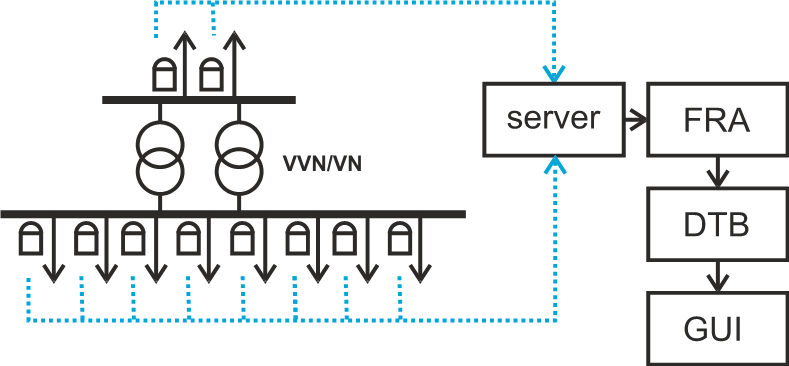
- Centralization of records:
- Automatic data download from HV/MV (VVN/VN) feeder protection relays (e.g., in COMTRADE format).
- Communication via standard protocols (IEC 61850, IEC 60870-5-104, FTP/SFTP).
- Disturbance analysis:
- Calculation of key parameters of fault events.
- Fault localization within the network (including double-ended fed lines).
- Event separation, statistics, and generation of fault reports.
- Central database for storage and statistical evaluation of all data.
- Visualization via a web portal with secured access.
Analytical functionalities of the FRA system:
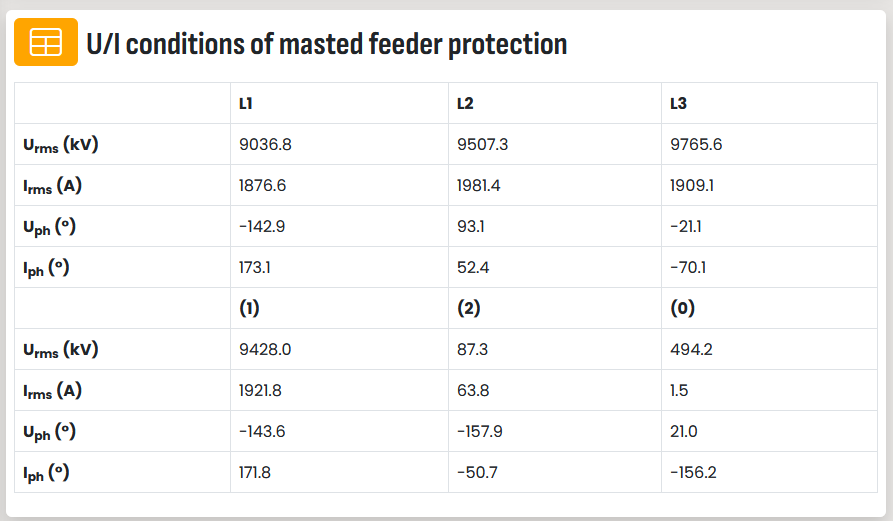
- Fault localization on double-ended fed HV (VVN) lines.
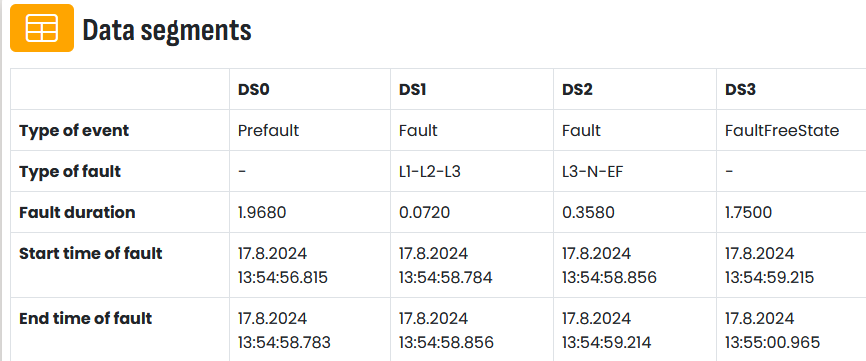
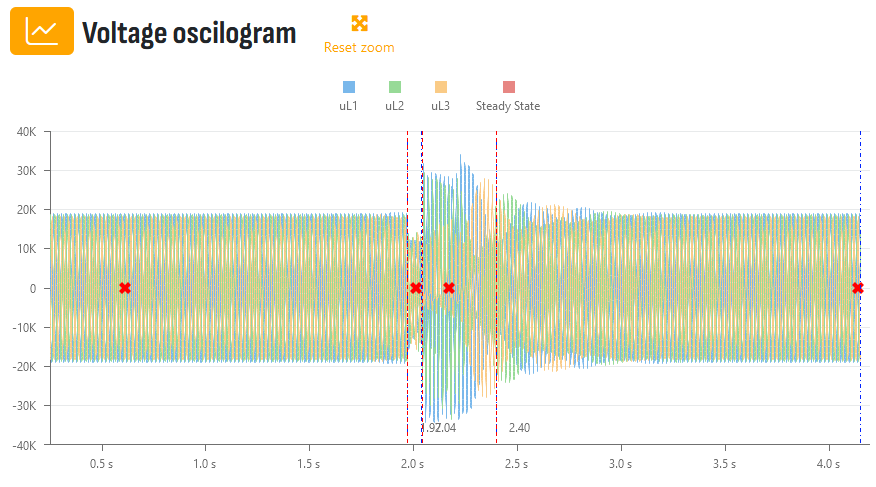
- Event separation and estimation of characteristic fault parameters.
- Statistics for the purpose of quantifying the risk of electric shock.
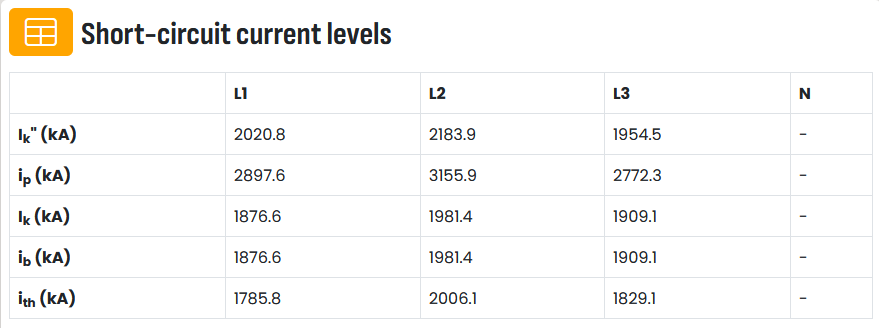
- Recording and evaluation of actual short-circuit currents.
- Preparation of fault report forms.
- Recording of voltage events.
- Evaluation of fault risk levels.
- Recording of elements affected by the fault.
- Estimation of ground currents for all types of short circuits (residual current).
Fault localization on double-fed HV lines also addresses:
- Correction of arc fault influence in LN faults (estimation of synchronization angle)
- Elimination of the need for knowledge of zero-sequence components for fault localization
- Calculation of relative distance for double-fed lines based on a numerical model of the affected line
- Ability to account for line inhomogeneity (to be implemented in the future)
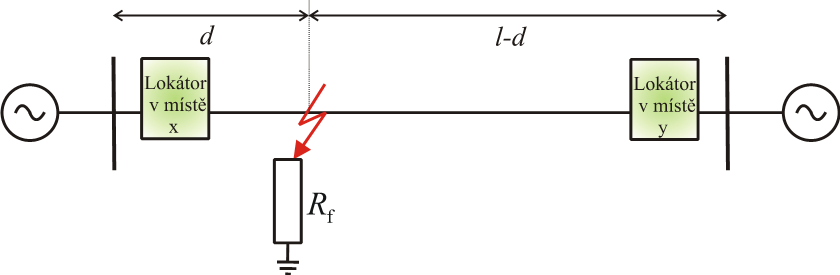
Logging and assessment of actual short-circuit currents also includes:
- Generation of fault reports
- Tracking of elements affected by the fault (monitoring of breaker operations during faults)
- Logging the frequency of feeder breaker operations (tripping/closing) during short-circuit events
- Auto-reclose (AR) statistics
What do you need to have or purchase?
- HV/MV feeder protection relays that capture disturbance records in a standard format.
- Communication interfaces supporting protocols such as IEC 61850/104 or FTP/SFTP.
- Communication units as required to ensure automatic downloading of records from protections (e.g., RTU7MC3) — compatible with the necessary protocols.
- Server platform for running the FRA system (can also be operated as a virtual machine, or shared with the Vdip system), MS Windows Server OS, standard PostgreSQL database (free), but can also be operated on MS SQL.
What are the approximate costs?
- The FRA system license for a small-scale deployment on several MV feeders from a primary substation starts at approximately 35,000 CZK / feeder, and with the increasing scope of the application, it can drop to approximately 7,000 CZK / feeder.
- Costs for labor associated with the implementation of the system.
- Simultaneous acquisition with the Vdip system significantly reduces both the license price and the implementation costs of the FRA system
What benefits does it bring you?
- Faster response to faults: Immediate data and fault localization without manual processing.
- Better network overview: Statistical evaluation of faults offering insight into reliability.
- Time and labor savings: Automation of data centralization and analysis.
- Decision support: Tools for fault reporting and trend analysis.
- Modularity and integration: Flexible deployment within existing infrastructure.
More detailed information can be found in the following documents: